Showing posts with label [Royal Australian Engineers]. Show all posts

Saturday, April 10, 2010

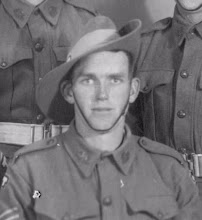
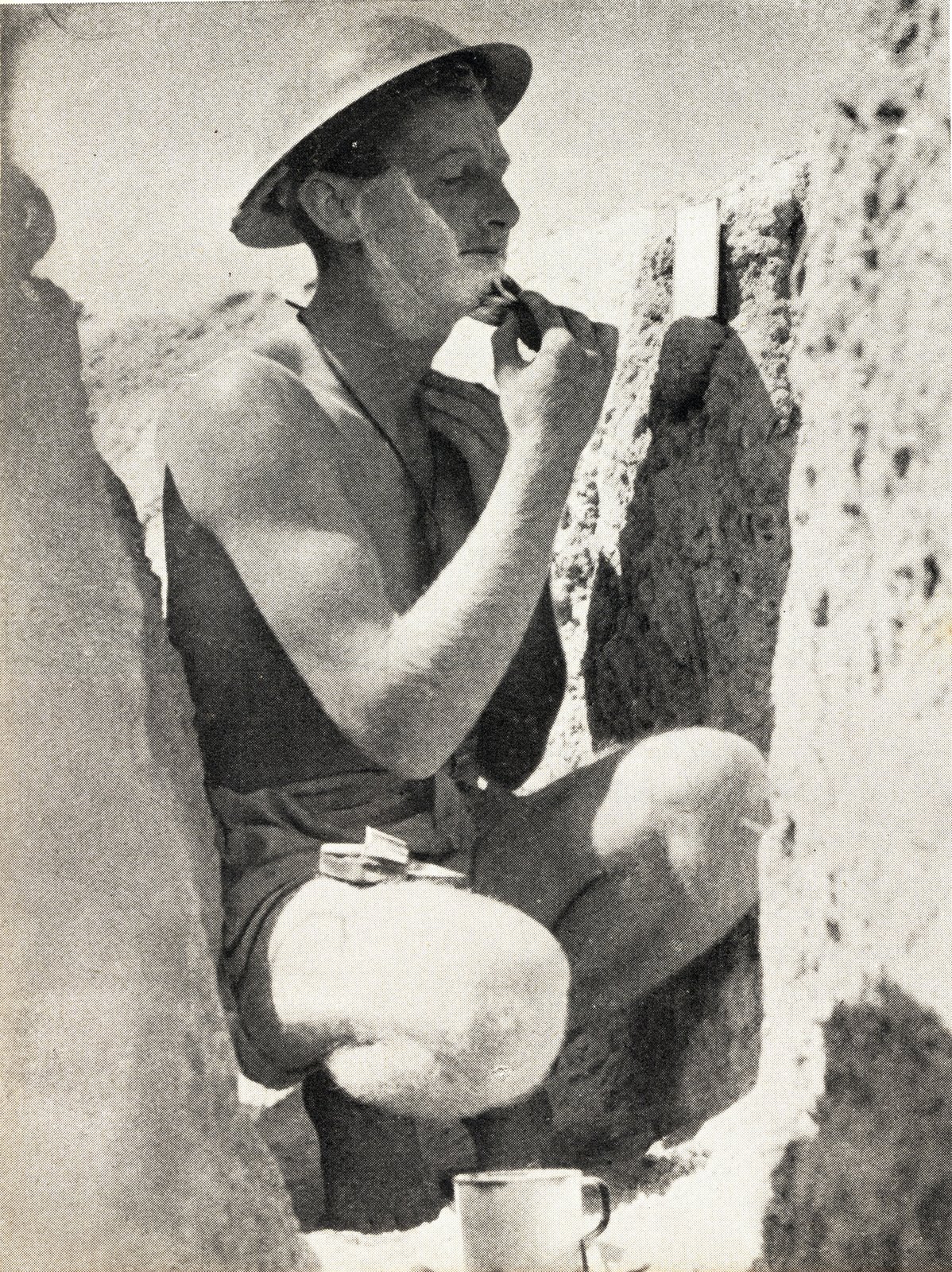
[Image] Cpl. John M. Munn 2/3rd Fd Coy RAE

August 1941
Tobruk, Libya

This smiling face belongs to VX3645 Cpl. John Montgomery Munn of the 2/3rd Field Company of the Royal Australian Engineers. The caption with this photo at the Australian War Memorial is simply this;

"snow white hair bleached by the sun and skin tanned almost black"

The combination of these two traits and his missing front tooth ensures that Cpl Munn looks far older than his age of 35 years at the time of this photo being taken in August 1941 at the height of the Siege of Tobruk. The conditions that Australian troops served under in the Western Desert ensured that they aged much faster than normal, especially with their extended exposure to the harsh desert sun. In an era where sunblock and even sunglasses were unheard of the men of the 9th division's skin tanned a deep bronze very quickly, especially with the normal Australian soldier's tendancy to remove his shirt at any opportunity.

Upon their return to Australia in early 1943 it was said that it was quite easy to tell a returned man in a crowd due to their deep suntans. Cpl. Munn is a classic example of this.

Though Cpl Munn survived the rigours of Tobruk and Alamein he wasnt to be so lucky in New Guinea. At 1229hrs on September 24th, 1943 at Finschafen, New Guinea whilst the 2/3rd Field Company was supporting the artillery that was covering the advance of the infantry towards Satelberg a large force of Japanese aircraft consisting of 12 bombers and over 20 fighter aircraft bombed the artillery positions resulting in large casualties in the ranks of the engineers. Cpl. Munn was killed in this attack. He was aged 37 at the time of his death.

Cpl Munn is memorialised on the roll of honour at http://www.awm.gov.au/research/people/roll_of_honour/person.asp?p=533261

image 009522 Australian War Memorial.

Saturday, September 6, 2008

[Image] An Incredible Escape

22nd April, 1941. Tobruk, Libya.

The Benghazi Handicap's Wooden Spooners.

Meet two of the 9th Division's luckiest men. QX1698 Sapper Stanley Curtis and QX2454 Sapper Edward Hetherington-Harford of the 2/7th Field Company, Royal Australian Engineers enjoy a well received cigarette after their late arrival in Tobruk on foot after a 16 day trek.

Left behind in Benghazi to plant demolitions on Italian supply dumps so that the advancing Afrika Korps could not take advantage of them the two Sappers planted explosives to cover the 9th Divisions retreat, known as "the Benghazi Handicap". When surprised by the rapid approach of the advancing Afrika Korp the two men hid and were overtaken by Rommel's Panzer Divisions.

Finding themselves behind enemy lines and surrounded by thousands of Axis troops the men hid by day and travelled by night where possible overland on foot. After a journey of 16 days, and 300 miles (483 kilometres), the men managed to sneak past German positions surrounding Tobruk and return to their units. Immediately hospitalised for treatment of their injuries it is not known if the men played any further part in the Western Desert Campaign. If so I believe they well deserved any rest coming to them after that.

image 041710 Australian War Memorial.

Monday, September 1, 2008

[Image] Bored Engineers are trouble

22nd September, 1941. Tobruk, Libya.

9th Division Engineers improvise a flamethrower.

This Sapper from the 9th Division's Royal Australian Engineers demonstrates a method of improvised flame throwing. In a used 44 Gallon drum he mixes a potion of 60% Benzol and 40% Petrol. Into the mix was thrown a handful of metal shavings.

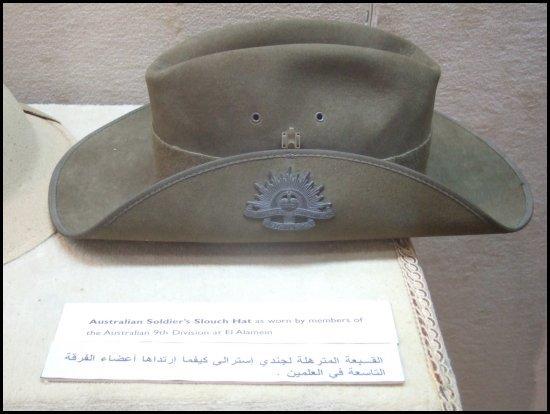
When ignited by remote device this drum exploded with an immense curtain of liquid flame that would be devastating to exposed infantry. I particularly like the silhouette of the slouch hat in the explosion in the bottom photo.

images 020665 and 020666 Australian War Memorial.


Sunday, August 24, 2008

[Memorial] Australian War Memorial, Tobruk

Sunset.

16th October, 1941. Tobruk, Libya.

The unveiling of the Australian War Memorial.

This photograph was taken at the official ceremony to commemorate the unveiling of the tablet on the Australian War Memorial at the Tobruk War Cemetery. The memorial, built entirely by sappers of the Royal Australian Engineers, included a marble tablet inlaid at the base of the memorial.

The inscription reads;

"Here is hallowed ground, for here lie those that died for their country".

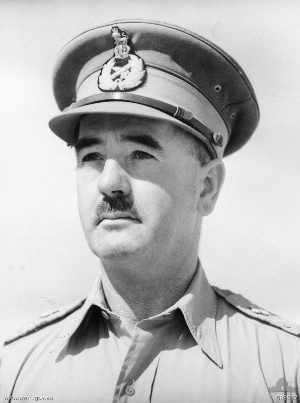
Major General Leslie Morshead officiated the official dedication of the war memorial to honour the Australian fallen of the Tobruk campaign. It would be some years before Maj. Gen. Morshead was to return to this site but return he did to honour his Rats of Tobruk.

image 020988 Australian War Memorial.

[Slang] Meet the Baitlayer

5th October, 1942. El Alamein, Egypt.

The baitlayer prepares his bait.

In another amusing example of Australian slang, the cooks of a battalion were referred to as "baitlayers". This derogatory term was a cheeky reference to the food being poisonous much like a bait for a wild animal.

In this picture the baitlayer is NX34516 Sapper Thomas M. O'Connor of the 2/4th Field Park Company, Royal Australian Engineers who has a reputation amongst the 9th Division as supposedly having 1001 recipies for bully beef. In this case he makes bully pancakes, which the men report as 99% pancake and 1% bully beef.

image 013357 Australian War Memorial.