Showing posts with label [Weapons Pit]. Show all posts

Monday, August 18, 2008

[Image] Fleecing the Saffas

21st July, 1942. El Alamein, Egypt.

9th Div troops play cards with the South Africans

These two 9th Division Machine Gunners pass the time in their weapons pit, between engagements, with a game of cards with two members of the South African Army.

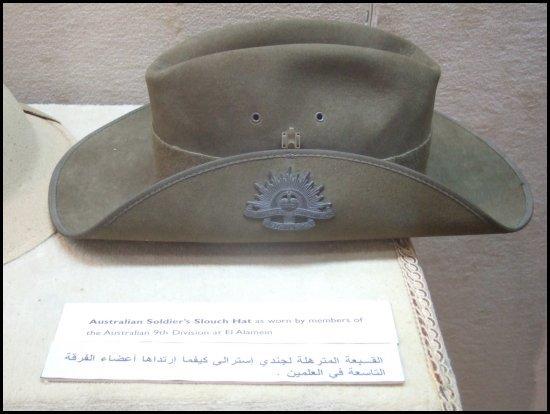
The British War Photographer who stumbled across this scene must have had a good laugh at the sight of dominion troops so engaged in gambling that they haven't even noticed they are being photographed. This is a great photo to demonstrate the different, yet distinct, styles of head wear in service with dominion troops at Alamein. The slouch hat and the pith helmet, symbols of their respective armies, and both being quite practical in the Western Desert. I suppose Aussies and Saffas know a thing or two about the desert. There are no deserts in England, Italy or Germany.

image E14671 Imperial War Museum.

Saturday, August 16, 2008

[Image] Tobruk's Anti Aircraft Defenses

6th September, 1941. Tobruk, Libya.

VX24598 Bombardier E.J. Courtney MM

VX24598 Bombardier Edward James Courtney of the 2/3rd Light Anti Aircraft Regiment, attached to the 9th Division demonstrates the Italian Breda Model 35 20mm cannon that he won his Military Medal on.

His citation for the Military Medal reads;

"For bravery and devotion to his duties in an A.A. detachment whilst under heavy dive bombing and machine gun fire."

At Tobruk on 25th April and 7th May, 1941.

"1. On 25th April at Pilastrino when over forty E.A. (Enemy Aircraft) took part, the Breda gun on which Gnr Courtney was a gun number had a stoppage during the engagement. The detachment took cover, with the exception of Gnr Courtney who remained at his post working to free the stoppage in spite of heavy machine gun fire and near bomb explosions, and succeeded in getting the gun into action again and enabling to detachment to reengage the E.A."

"2. On 7th May when protecting a troop of 60-pdr. guns in another dive bombing attack, Gnr Courtney's gun again had a stoppage. He preceded to clear the stoppage despite the fact that three ME.110's were machine gunning along the ridge and several of the bullets entered the gun pit narrowly missing him while he was working. Through his efforts the gun was eventually brought back into action."

Another classic example of Australian troops using a captured Italian gun against German aircraft. If it would shoot Aussies would use it.

VX24598 Bombardier E.J. Courtney MM's entire service record has been digitised by the Australian National Archives. Find the link in the "Research Links" sidebar to the right.

image 020589 Australian War Memorial.

Tuesday, August 5, 2008

[Image] 2/13th Mortar support at Tel el Eisa

Tel el Eisa, Egypt, 1st August, 1942.

A two pounder gets sent on its way.

NX16706 Pvt. Leslie S. Myers of the 2/13th Infantry battalion drops another two pound mortar shell into his launcher in support of the 9th Division advance at Tel el Eisa (The Hill of Jesus).

You can see what appear to be vehicles of some description on the horizon. Whatever they are they are above ground level and in this case a very valid target. You can see also a plume of smoke in the distance in the direction of fire of Pvt. Myers’ mortar. There also appears to be another dug in position several hundred yards in front of Pvt. Myers’ position. As he is firing live rounds in that direction my guess is that’s where Gerry calls home.

This photo taken not far above ground level can give you an appreciation of just how dangerous it would be to be caught in the open of the desert during a shell attack. Your only hope would appear to be to keep moving forward.

Pvt. Myers seems to have quite a bit about the top of his weapons pit. A Lee-Enfield .303 rests on the sandbags behind him as too does his cigarettes and matches. He looks like he has more mortar ammo to his right within easy reach and he is wearing the commonwealth Tin Hat with hessian cover.

To his left is what looks like a binoculars case. Makes sense that the guy with the mortar would have field glasses to spot targets with and to accurately gauge the range on enemy positions. Empty tins of bully beef can be seen in the foreground of the photo below. In the bottom photo Pvt. Myers looks like he has some kind of rangefinder or telescope.


images 0941967 and 041968 Australian War Memorial.

Saturday, August 2, 2008

[Image] Tobruk (c.2002 in colour)

The lone Fig Tree still stands north of the Derna Road

During the Siege of Tobruk, the 9th Division operated a Regimental Aid Post (RAP) in a cave underneath the lone fig tree just north of the Derna Road and behind the Red Line. The cave, like the fig tree is still there.


Weapons pits of the Red Line still virtually untouched.

Only time itself seems to have been in these weapon pits since the departure of the allied forces from Tobruk. There is even still, in 2002, evidence of spent shell casings and magazines found in these trenches.

The Harbour as it was in 2002.

And this is what the whole thing was all about. Whoever controlled the deep water harbour in Tobruk, the only deep water port between Egypt and Tripoli, could rapidly move troops and supplies via sea rather than transport them up to 1,200 miles over the harsh desert.

Holding Tobruk for the time that they did meant that the Australian's and English troops there delayed the Battle of El Alamein until a time when the Allies were adequately reinforced and supplied. It seems weird to see the harbour in colour and without the wrecks of so many ships in it.

images from Galen R. Frysinger, Wisconsin, USA. http://www.galenfrysinger.com/tobruk_libya.htm

Friday, August 1, 2008

[Image] Inside a Rat of Tobruk's nest


Tobruk, Libya, July 1941.

In the dug out of the Officers of the 2/24th Battalion.

This heavily sandbagged weapons pit in the Red Line of Tobruk is temporary home to VX48780 Capt. G.G. Anderson and VX48694 Capt. G.I "Ian" Malloch M.C. of the 2/24th Infantry Battalion.

This weapons pit appears roomier than other examples seen with ordinary ranks. That aside it is very much a functional structure. The highly sandbagged walls protected the men from shell burst, machine gun and sniper fire, provided that they kept their heads below the level of the sandbags. Note between the Captains is a rectangular firing slot in the sandbags to allow for weapons fire through the protective wall. German snipers were know to shoot men through these holes at ranges of 400 yards. A Lee-Enfield .303 rifle stands against the wall in the foreground. Both men wear the standard commonwealth Tin Hat, but this time with hessian covers.

VX48694 Capt. George Ian Malloch M.C. (right) was awarded the Military Cross for "conspicuous gallantry and devotion to duty" at Tobruk on 17th May 1941 for leading a counter attack on a heavily defended German position above an escarpment about 50 metres high. Despite being shot 5 times in the arm, head, knee, thigh and hand and incapacitated he kept his calm and successful ordered his men from his fallen position. This resulted in the position being taken and saved the lives of many men. Staying calm in spite of grievous injuries and keeping on task set an example amongst the men of the 2/24th that filled them with pride to serve with such an officer.

VX48780 Capt. Graham Grantham Anderson (left) died of wounds (D.O.W) received in the first Battle of El-Alamein on 13th July, 1942. At the time of his death he was 23 years old. Capt. Anderson is memorialised at the Australian Roll of Honour here:


The National Archives of Australia has a completely digitised version of VX48694 Capt. G.I Malloch M.C.'s service record. Included in this is the originally submitted citation recommending him for the Military Cross (page 28 of record). View Capt. Malloch's Service Record here:


(Enter Capt. Malloch's service number "VX48694" in the key word field, hit "enter", then click on the "View digital copy" link.)


image p00237.036 Australian War Memorial.

Monday, July 28, 2008

[Image] Post R49 Tobruk Explained

Post R49
Red Line Outer Defenses.
Tobruk, Libya, 1941.

This German aerial reconnaissance image shows the outer perimeter defenses at post R49. This post is one of those built in the early 1930's by the Italian occupation force. It consisted of concrete trenches and weapons pits, an anti-tank ditch and even a underground bunker for when you were under artillery fire. All this surrounded by miles of razor wire and fields of landmines.

The numbers in the picture refer to the following;

  1. Main anti-tank ditch
  2. Barbed Wire
  3. Barbed Wire
  4. Weapons pit with connecting trench and bomb-proof shelter
  5. Local anti-tank ditch
  6. Supply road

9th Division troops would occupy these posts for weeks on end. Some of the posts were within 400 yards of German lines and even raising your head two inches above the sandbags would draw intense fire from German snipers.

Days in the line would often be spent resting due to the intense heat and the lack of usable cover in the desert. Exposing yourself in daylight hours would often be fatal. In Tobruk, it was said that the Australians owned the night. Once the harsh African sun set it would be time for the nightly patrols to commence.

Patrols would leave posts like the above one pictured to venture thousands of yards beyond the wire to gather intelligence (usually by capturing prisoners for interrogation) or to destroy a known objective. At this activity the Australian's excelled.

image #44246L3 by Ullstein as scanned from "The Rats Remain - The Siege of Tobruk, 1941" by J.S. Cumpston, Grayflower Productions 1966.

Sunday, July 27, 2008

[Image] 2/23rd Bren Gunner at Tobruk

3rd September, 1941
Tobruk, Libya.

VX26227 Pvt. George E. Jeffs, 2/23rd Infantry Battalion

Private Jeffs mans a Bren Gun in a weapons pit on the Red Line at Tobruk. This is a great photo of the tripod mounted Bren light machinegun (LMG) in action from a perspective not often seen in Australian war photos. The smiling face of Pvt. Jeffs adds a very Australian charm to it. Pvt. Jeffs wears his Tin Hat high on his brow so that when prone he can see down the sights of his Bren gun whilst dispensing .303 calibre welcoming presents to "Gerry".

Sadly, Private Jeffs survived all that the Axis had to offer in North Africa only to be Killed In Action (K.I.A.) by the Japanese at the Quoja river region, New Guinea on 17th November, 1943. At the time of his death (the promoted) Cpl. George Edward Jeffs was 24 years old.

VX26227 Cpl. G.E. Jeffs is memorialised on the Roll of Honour here: http://www.awm.gov.au/roh/person.asp?p=147-11899

image 020558 Australian War Memorial.

Friday, July 25, 2008

[Image] 9th Division Bren Gunner at Tobruk.


This Bren Gunner of the 2/13th Infantry Battalion opens fire on German lines 400 yards away from his weapon pit in the Red Line of Tobruk.

image 009510 Australian War Memorial.