Wednesday, July 30, 2008
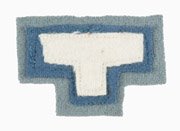
[Heraldry] Rats of Tobruk Association

[Image] 9th Division troops move From Blue to Red Line at Tobruk
[Image] On leave in Palestine, 1941.

Tuesday, July 29, 2008
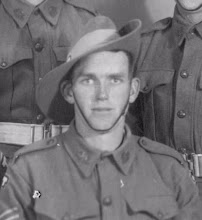
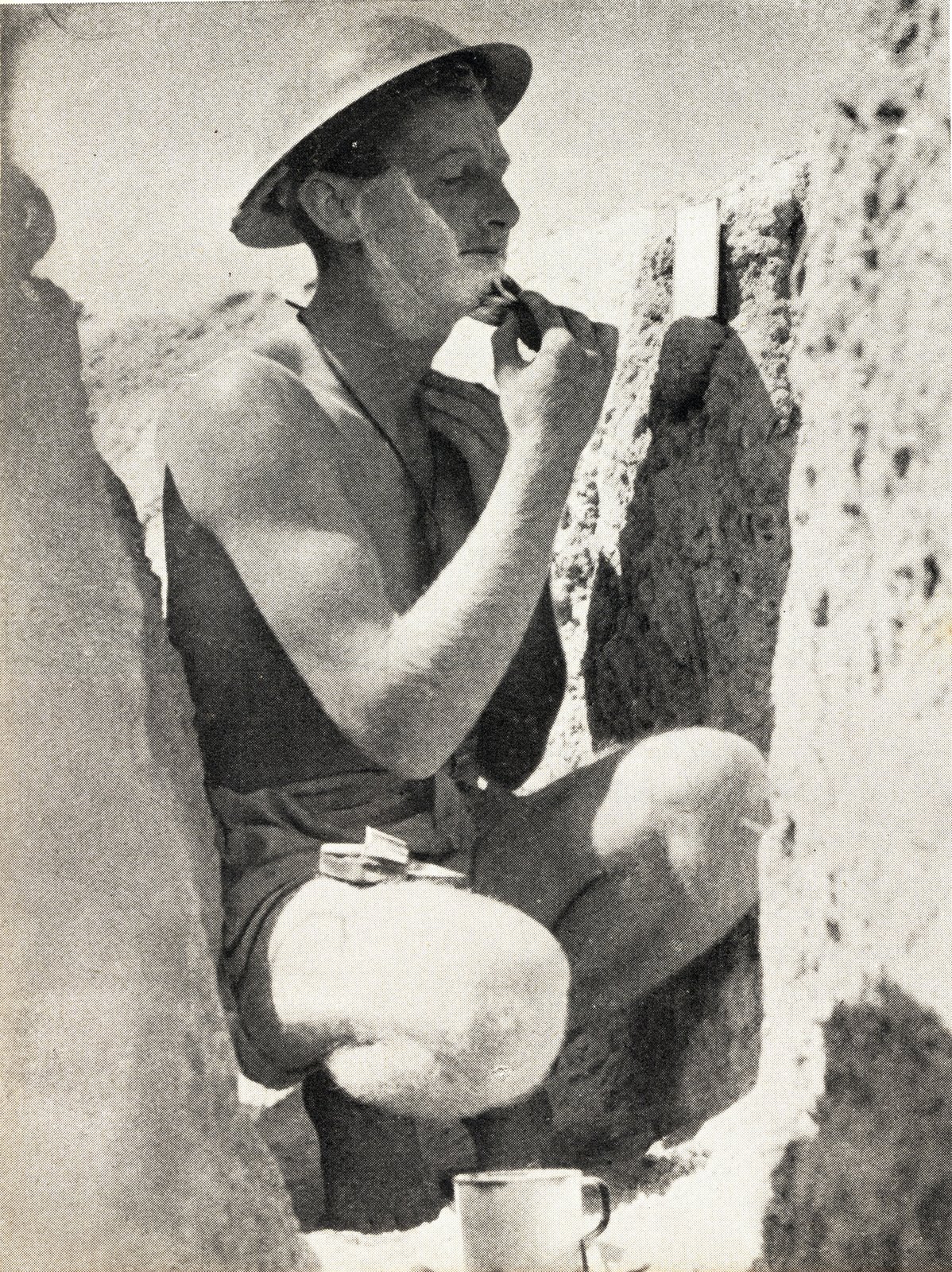
[Image] The Baby Faced 'Rat of Tobruk'

NX21849 Pvt. Elson Evered Bell on leave, aged 18 years.
If you are thinking that Pvt. Bell of the 2/17th Infantry Battalion looks young, that's because he was. Following in the time honoured Australian tradition of not being entirely truthful about your age to go to war Pvt. Bell bumped up his age by 5 years to meet the strict age requirements of the Second A.I.F.
Being only 16 years, 7 months old when he enlisted on 27th May 1940 (the day before my Grandfather) Pvt. Bell was the youngest man Mentioned in Despatches (MiD) at Tobruk.
The Australian War Memorial writes "Private K E Bell, A Company, 2/17th Infantry Battalion ... was aged 17 years when he was Mentioned in Despatches for bravery at Tobruk. During an offensive patrol he carried in his officer although wounded himself. The officer later died."
The Australian War Memorial credits this photo as being of Pvt. K. E. Bell of the 2/17th Battallion. My personal research has led me to believe that the baby faced Rat of Tobruk was actually Pvt. E. E. Bell who was, like the AWM states, a member of A Coy. 2/17th Battalion who was Mentioned in Despatches and wounded in Tobruk.
The nominal roll of the 2/17th Battalion shows only one soldier with a surname of Bell who was wounded at Tobruk, and no soldier with a name of K.E. Bell. The nominal roll of the 2/17th lists his service number as NX21849 and also mentioned was the fact that he was wounded not only at Tobruk, but also Alamein and New Guinea. He was discharged on 30th November, 1945 having just celebrated his actual 21st birthday the month before. How bizarre to think that Pvt. Bell fought a World War for 5 years and won all before his 21st birthday.
They don't make 'em like him anymore.
image 024225 Australian War Memorial
Nominal roll research from "What we have, we hold - A history of the 2/17th Australian Infantry Battalion", 2/17th Battalion History Committee, Sydney.
[Quote] QX11512 Pvt. John Joseph Alman
At this service she reads a prepared speech that her Grandfather (a member of the 7th Division's 2/9th Infantry Battalion attached to the 9th Division for the duration of the siege) is to read at a similar service back in Australia. It's final moving paragraph is this;
"While remembering our mates and their bravery and dedication sometimes it is so easy to forget just how young these men were and what they did for their country. It makes you feel so proud to be an Australian."
- QX11512 Pvt. John J. Alman 2008.
Sadly Pvt. Alman passed away not long after his Grandaughter read his moving words to a small gathering of expats on Anzac Day, 2008. At the time of his death Pvt. Alman was 87 years old.To read the article by Kim Wildman click here http://travel.ninemsn.com.au/article.aspx?id=452426
[Slang] "To draw the crabs"
Draw the crabs -
"to perform any action in the front line, deliberate or not, that results in a rapid offensive response from opposing German forces, usually in the form of sniper, machinegun, mortar or artillery fire."
Example - #1
Digger A : "Mate, what did ya do that for? It was nice and quite out here with Gerry snoozing."
Digger B : "I was bored mate. Thought I'd draw the crabs for a bit."
Example - #2
Digger to mate: "Better put that smoke out mate, wouldn't want ya to draw the crabs."
[Image] Tobruk's Anti-Aircraft Guns welcome the Luftwaffe
[Quote] Lieutenant-General Morshead

- quote: Barton Maughan, "Tobruk and El Alamein", Canberra, 1966, p. 752
Monday, July 28, 2008
[Image] Post R49 Tobruk Explained
This German aerial reconnaissance image shows the outer perimeter defenses at post R49. This post is one of those built in the early 1930's by the Italian occupation force. It consisted of concrete trenches and weapons pits, an anti-tank ditch and even a underground bunker for when you were under artillery fire. All this surrounded by miles of razor wire and fields of landmines.
The numbers in the picture refer to the following;
- Main anti-tank ditch
- Barbed Wire
- Barbed Wire
- Weapons pit with connecting trench and bomb-proof shelter
- Local anti-tank ditch
- Supply road
9th Division troops would occupy these posts for weeks on end. Some of the posts were within 400 yards of German lines and even raising your head two inches above the sandbags would draw intense fire from German snipers.
Days in the line would often be spent resting due to the intense heat and the lack of usable cover in the desert. Exposing yourself in daylight hours would often be fatal. In Tobruk, it was said that the Australians owned the night. Once the harsh African sun set it would be time for the nightly patrols to commence.
Patrols would leave posts like the above one pictured to venture thousands of yards beyond the wire to gather intelligence (usually by capturing prisoners for interrogation) or to destroy a known objective. At this activity the Australian's excelled.
image #44246L3 by Ullstein as scanned from "The Rats Remain - The Siege of Tobruk, 1941" by J.S. Cumpston, Grayflower Productions 1966.