Monday, August 18, 2008

[Image] A letter home from Alamein

10th September, 1942. El Alamein, Egypt.

A precious letter home.

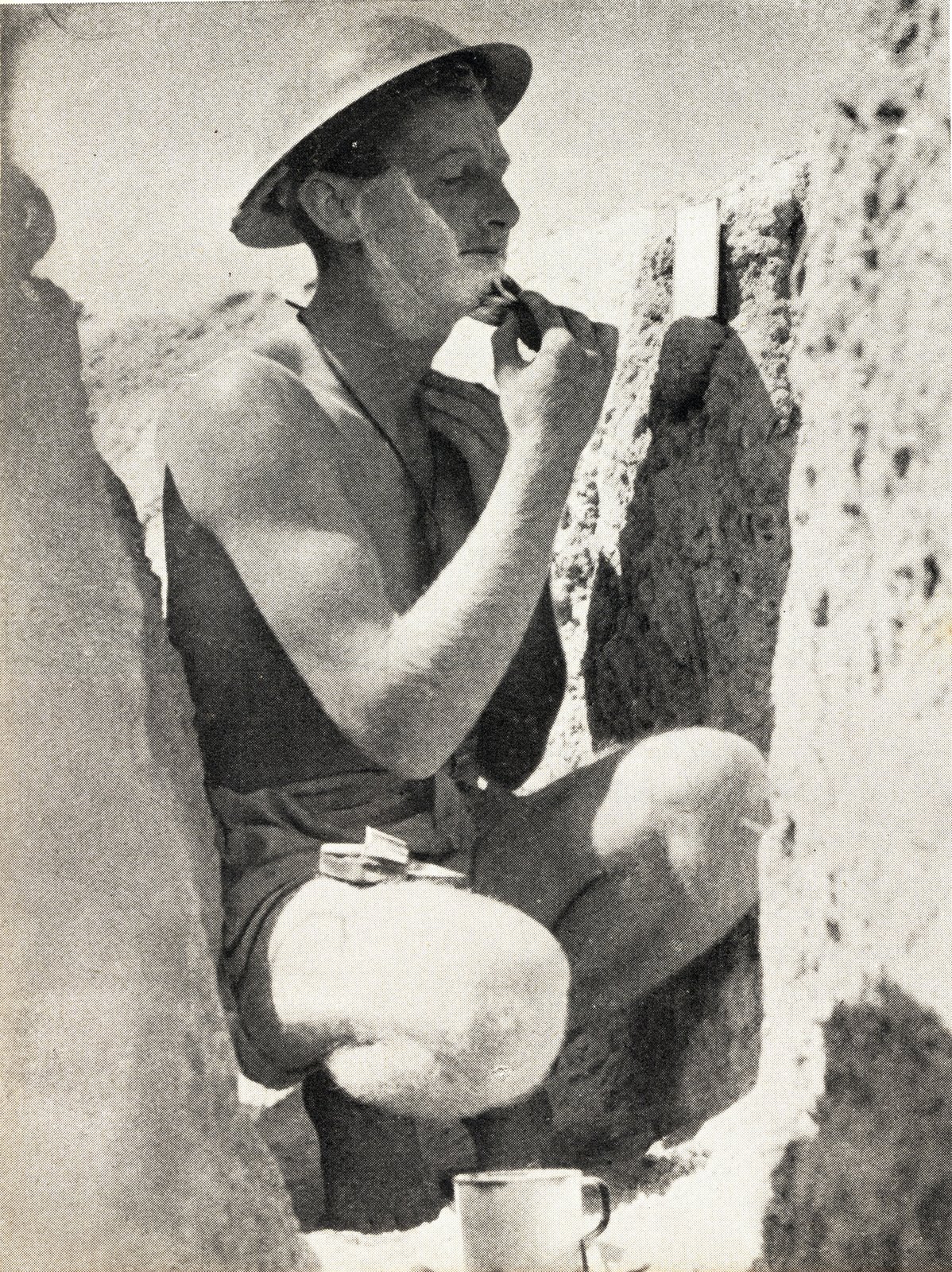
This unidentified Digger of the 9th Division enjoys a few hours out of the front lines in organised relaxation at the Alamein beachfront. Rather than go for a much deserved swim this soldier prefers to write a letter home but ponders what to write.

In typical Australian fashion this soldier is shirtless, yet still wears the very practical slouch hat. The leather thong of his identity discs are visible around his neck and this lucky soldier writes with a fountain pen and appears to have a ready supply of proper writing paper. Both pens and paper were always in short supply for Diggers in the Western Desert. Letters would often be written home on any kind of scrap paper available. It was not uncommon for Aussies to write letters home on paper that they had captured from Italian or German troops.

Troops of the 9th Division always enjoyed their brief stints at the Alamein beach front. Often the swim in the ocean would be the only wash the troops would get for weeks on end and one wonders how much the trips to the beach were motivated by a genuine concern for the men's welfare or more an opportunity for the officers to rid their men of the horrible smell that accompanied them where ever they went.

image 042004 Australian War Memorial.

Sunday, August 17, 2008

[Image] Rommel in Colour

1941, Western Desert, Libya.

Lt. Gen. Erwin Rommel.
GOC Deutsches Afrika Korp.

This rare photo of Rommel in colour in the Western Desert gives a great insight into the German high command of the Afrika Korp. The formality of the uniforms is astounding considering the heat experienced in the desert. Even Morshead wore shorts.

An interesting anecdote I have come across worth sharing is one about Rommel's goggles. It was written that Rommel found these goggles in the wreckage of an Australian armoured vehicle lost in the Benghazi Handicap. Liking the design so much he discarded his German issued goggles and for the rest of the North African campaign Rommel wore Australian goggles.

[Image] The Digger of Alamein

The Australian Digger, Alamein 1942.

This photo taken at the Alamein War Museum in Egypt shows the typical Australian Infantry soldier of the Western Desert of 1942. A Lee-Enfield .303 rifle, a bayonet and of course the tin hat are ever present.

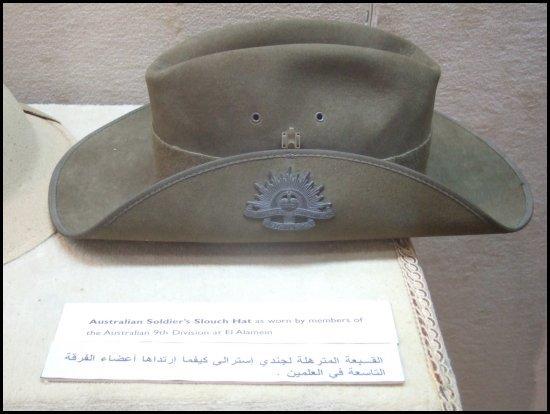
Several things differ between the model soldier here and photos of actual Aussie soldiers at Alamein that are worth mentioning. I think that this photo is how the regulation Australian soldier should have looked. In reality the Australian soldier at Alamein was most likely bare chested. He was more likely to wear a slouch hat than a tin hat and was more often than not bare footed. This Digger is also way too white in skin tone to have spent any length of time in the Western Desert.

The Diggers of the 9th Division may have gone away white but came back the very image of the 'bronzed aussie'. This was an era decades before sunscreen. As a result skin cancers were a huge concern for returned men of the 9th Division even way into their latter years. For some it wasn't the Germans that killed them but the Western Desert sun itself many decades later.

The Australians were a casual lot with their uniforms in all theatres of the second world war. This is what makes some of the photos even more powerful because of the contrast in their casual appearance and the horrible nature of their surroundings.

image Alamein War Museum, Egypt.

[Image] Crocodile Dundee of Tobruk


26th September, 1941. Tobruk, Libya.

SX1417 Pvt. V.J. Fuller models the new look slouch hat

Pvt. Victor John Fuller of the 2/3rd Field Company, Royal Australian Engineers, finds a new way to accessorise with a belt of captured Italian Breda Model 37 8mm machine gun bullets making a nice hat band for his weathered slouch hat.

I think Paul Hogan has a lot of explaining to do after seeing this photo. Crocodile Dundee anyone?

image 020644 Australian War Memorial.
Saturday, August 16, 2008

[Image] Tobruk's Anti Aircraft Defenses

6th September, 1941. Tobruk, Libya.

VX24598 Bombardier E.J. Courtney MM

VX24598 Bombardier Edward James Courtney of the 2/3rd Light Anti Aircraft Regiment, attached to the 9th Division demonstrates the Italian Breda Model 35 20mm cannon that he won his Military Medal on.

His citation for the Military Medal reads;

"For bravery and devotion to his duties in an A.A. detachment whilst under heavy dive bombing and machine gun fire."

At Tobruk on 25th April and 7th May, 1941.

"1. On 25th April at Pilastrino when over forty E.A. (Enemy Aircraft) took part, the Breda gun on which Gnr Courtney was a gun number had a stoppage during the engagement. The detachment took cover, with the exception of Gnr Courtney who remained at his post working to free the stoppage in spite of heavy machine gun fire and near bomb explosions, and succeeded in getting the gun into action again and enabling to detachment to reengage the E.A."

"2. On 7th May when protecting a troop of 60-pdr. guns in another dive bombing attack, Gnr Courtney's gun again had a stoppage. He preceded to clear the stoppage despite the fact that three ME.110's were machine gunning along the ridge and several of the bullets entered the gun pit narrowly missing him while he was working. Through his efforts the gun was eventually brought back into action."

Another classic example of Australian troops using a captured Italian gun against German aircraft. If it would shoot Aussies would use it.

VX24598 Bombardier E.J. Courtney MM's entire service record has been digitised by the Australian National Archives. Find the link in the "Research Links" sidebar to the right.

image 020589 Australian War Memorial.
[Image] The RAAF drops in at Alamein.

21st September, 1942. El Alamein, Egypt.

RAAF Kittyhawk makes a forced landing.

This RAAF Kittyhawk made a forced landing in 9th Division positions at Alamein after a succesful attack run over German held territory. Unfortunately on the return run he was hit by severe anti-aircraft, or ack ack fire and was forced to make a rather skillful forced landing. This plane would have been rapidly salvaged, repaired and put back into service.

My mate Terry is currently restoring a 26 litre supercharged V12 Allison Engine out of one of these planes. I bet his neighbours can't wait for it to kick over for the first time.

image 013279 Australian War Memorial.
[Image] German War Graves at Alamein

September 1942, El Alamein, Egypt.

German War Graves found inside Australian positions.

When the Germans attacked 9th Division positions in September 1942 at Alamein they took a portion of the Australian minefield and held it for a number of days until a counter attack dislodged them.

During this time the Germans buried a number of their dead that had fallen in the no mans land between forward positions. Both sides buried each others dead if it was safe to do so. The men who occupy these graves were buried during this brief period. The Germans brought with them a supply of ready made wooden crosses in anticipation of having to perform this task.

An unidentified Tommy Gunner of the 9th Division looks on at the final resting place of the men who were his enemy.

image 042007 Australian War Memorial.
[Image] Death of a Stuka

1941. Tobruk, Libya.

One less Stuka in the parade.

For troops in Tobruk, the daily raids by the German Stuka dive bombers on their harbour and artillery positions became known as "The Stuka Parade". Often these planes would descend on their targets at incredibly steep angles with large payloads of bombs. Sirens attached to the planes would scream the faster they dived in an attempt to demoralise the opponent.

Once their bombs were released they often flew out towards the El-Adem area to circle around below the line of the escarpment held by the German's in safety to return to strafe the Australian positions holding the red line. It became almost like a game with the same planes flying over the same positions each day at the same time often at altitudes of little more than 100 feet.

This particular Stuka flew a little too close to the Red Line and was brought down. Wrecks like this were often stripped by Australian souvenir hunters. You can see that someone has cut the swastika out of the aluminium of the tailplane. These were often the first thing to go as they were light and could be mailed to unsuspecting relatives back home. There is very little of value left on this plane.

image 040612 Australian War Memorial.

[Image] The Crusader Tank

10th July, 1942. El Alamein, Egypt.

The 9th Division's Cavalry Regiment's Crusader Tank.

Meet the Crusader. This is the best that the British had to counter the German's Panzers. Whilst faster than the Panzer, the Crusader was lacking in every other department. It had less armour, a much smaller two pounder gun and was plagued by mechanical problems.

It also had the severe tactical disadvantage of not having a High Explosive shell for it's main gun. Whilst these shells existed they were not made available in time. Realising the severe disadvantage that they faced with their lack of armour these tanks were replaced later in 1942 by the American built Shermans and Grants which were much more capable of taking on the Panzer's of the Afrika Korps on a much more even footing. The Crusader finished the War in a support role and was more often used as an artillery tractor.

image 024483 Australian War Memorial.