Saturday, September 6, 2008

[Image] Departing Diggers leave their mark.

20th September, 1941. Tobruk, Libya.

Soon to depart troops leave their mark.

Having been notified that they were to be relieved soon these Diggers decided to leave their marks on a former cafe in Tobruk.

Pictured from left to right are;

SX8509 Pvt. Archibald Lawrence Boyes of the 2/48th.

SX5207 Pvt. Torrence Ford Egan of the 2/48th.

VX40954 Pvt. William Neil Morris of the 2/48th. Pvt. Morris is having a joke by painting his name as "Ned Kelly".

All three men survived the war, especially the carnage of Alamein that was so devastating to the 2/48th Infantry Battalion.

image 020629 Australian War Memorial.

[Image] Relieved Rats arrive in Alex

27th September, 1941. Alexandria, Egypt.

Relieved at last!

These 9th Division veterans of Tobruk manage a smile as they arrive via "bomb alley" to the safety of Alexandria, Egypt. Many of these first men to arrive were wounded and were amongst the priority evacuees.

Evacuated at night by destroyers of the Royal Navy and the Royal Australian Navy these ships would arrive on moonless nights and arrive, unload and take on passengers and cargo and then depart all within the space of half an hour. Once free of the harbour the next 60 miles of coastline was known as "bomb alley" as it was the last stretch of water before Egypt in range of Luftwaffe planes. Zigzagging at high speed to avoid bombers and to break up their wakes these ships were the lifeline of Tobruk Garrison. Everything coming into and going out of Tobruk during the siege travelled via this method.

Whilst the men in this photo have been individually numbered for identification purposes the notation with their names that accompanied it has long since been lost.

image 020470 Australian War Memorial.
[Image] An Incredible Escape Vol. 2

August, 1941. Tobruk, Libya.

A 1,000 pound dud.

These four men of the 9th Division owe their lives to the Czechoslovakian resistance, many members of whom secretly work in Nazi Munitions plants in their occupied country against their will.

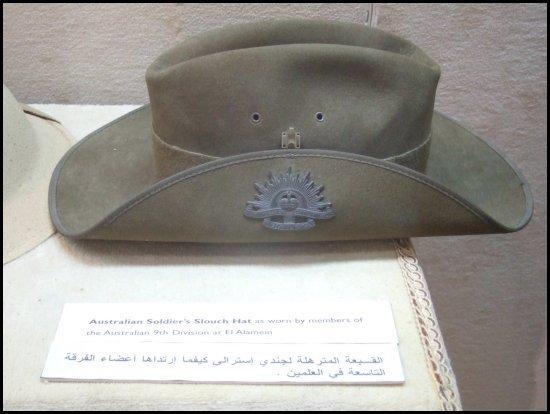
This 1,000 pound bomb (453.5 kilograms) contained huge amounts of high explosives but without their detonators they were inert weights. This particular bomb landed 20 feet from the anti-aircraft gun manned by the above Diggers. Amazed to still be alive the men inspected the dud after the attack and found in labeled "Made in Czechoslovakia" in non official markings.

This was not the only dud from Czechoslovakia to arrive at Tobruk during the siege. One memorable one, another 1,000 pounder landed in the town square and failed to detonate. When Engineers arrived to disarm it so it could be removed an examination of where the detonator should have been found a crumpled piece of paper with a handwritten note saying simply;

"From your friends in Czechoslovakia. I am sorry but this is all we can do to help right now".

image 009520 Australian War Memorial.
[Image] Tracers at Twilight.

August, 1941. Tobruk Libya.

9th Division Bren Gunner opens fire at dusk.

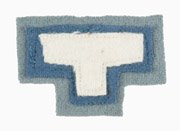
With the glow of their illumination lighting their flight path these tracer bullets leave a visible sign of their passage at night as they rapidly pepper the German lines a mere 400 yards away.

This photo was taken during a fierce exchange of machine gun fire between the Aussies and the Germans on the Red Line. Twilight was a preferred time for attacks and counter-attacks as the dying light reduced the effectiveness of both machine guns and artillery. Tracer rounds assisted gunners in aiming their fire at night as they could see the path of their bullets. Problem is so could everyone else.

image 009492/14 Australian War Memorial.
[Image] An Incredible Escape

22nd April, 1941. Tobruk, Libya.

The Benghazi Handicap's Wooden Spooners.

Meet two of the 9th Division's luckiest men. QX1698 Sapper Stanley Curtis and QX2454 Sapper Edward Hetherington-Harford of the 2/7th Field Company, Royal Australian Engineers enjoy a well received cigarette after their late arrival in Tobruk on foot after a 16 day trek.

Left behind in Benghazi to plant demolitions on Italian supply dumps so that the advancing Afrika Korps could not take advantage of them the two Sappers planted explosives to cover the 9th Divisions retreat, known as "the Benghazi Handicap". When surprised by the rapid approach of the advancing Afrika Korp the two men hid and were overtaken by Rommel's Panzer Divisions.

Finding themselves behind enemy lines and surrounded by thousands of Axis troops the men hid by day and travelled by night where possible overland on foot. After a journey of 16 days, and 300 miles (483 kilometres), the men managed to sneak past German positions surrounding Tobruk and return to their units. Immediately hospitalised for treatment of their injuries it is not known if the men played any further part in the Western Desert Campaign. If so I believe they well deserved any rest coming to them after that.

image 041710 Australian War Memorial.

[Image] A Rat in a Hole Vol 2.

September, 1941. Tobruk, Libya.

A very creative doover.

This soldier of the 2/23rd Infantry Battalion takes shelter from the blistering sun of the Libyan desert in his doover improvised by hanging a hammock between the rocks of a sangar built on the side of a small rise.

In the shade, yet open to the breeze on one side the hammock would allow the air to circulate around the Digger and keep him as cool as possible in the situation.

image 020493 Australian War Memorial.

[Image] Rare reprieve for 2/23rd Captain.

June, 1941. Tobruk, Libya.

VX15648 Capt. Edwin P. Tivey takes a rare break.

Capt. Ed Tivey of the 2/23rd Battalion takes a moment of quiet reflection to smoke a cigarette inside the dugout of the Headquarters of the 26th Brigade.

With conditions for officers at HQ areas better than those of the men at the front lines they were hardly luxurious. Often the positions of the HQ areas were plotted by German spotter planes and relayed to the artillery who then would launch a barrage of shells onto the locations. More than one HQ was destroyed by direct hits by the German artillery during the Western Desert Campaign.

Capt. Tivey would have been responsible for 4 platoons of infantry totalling 129 men. It is no wonder that a quiet cigarette in the solitude of his dugout would be a welcome relief from the pressures of command.

Unfortunately research into Capt. Tivey has revealed that he died from illness in Italy on 26th March, 1943. At the time of his death in an Italian POW camp, then promoted Major Tivey was 34 years old. As his service record is yet to be digitised by the National Archives I am unable to ascertain the circumstance behind his capture and transfer to Italy.

Major Edwin Peter Tivey is memorialised at the Roll of Honour here http://www.awm.gov.au/roh/person.asp?p=147-23753

image 020151 Australian War Memorial.

[Image] "The Seat of the Army"

September, 1941. Tobruk, Libya.

The AIF Field Latrine.

This 9th Division Corporal shows off the type of field latrine used by Australian troop in front line positions at Tobruk. With typical Australian humour it was nicknamed "The seat of the Army".

Designed for use on the sandier parts of the desert, the digger would take a small shovel and dig a hole and place the "seat" over it and complete his task. Careful choice of your boghole's position was necessary to avoid detection by snipers and air attack.

image 021003 Australian War Memorial.

[Image] Wounded 2/23rd patrol returns

17th September, 1941. Tobruk, Libya.

2/23rd Patrol returns through the wire.

This patrol from the 2/23rd Battalion returns through a gap in the wire in their Red Line posts. At this time the 2/23rd had just relieved the 2/48th the night before in their positions on the Western salient.

This seven man patrol returns with two wounded. One carried on a collapsible stretcher the other with a bandaged thigh wound is carried by a mate piggy back style. Casualties in this part of Tobruk were high.

image 020669 Australian War Memorial.